Showing posts with label education. Show all posts

Wednesday, 19 November 2014

Who is Learning More: That is the Question


After going into a few different classrooms and doing a 'Number Talk' with the students a few things are becoming quite clear.

  • We have some incredibly smart students in this school!
  • Our students have been taught some fantastic strategies to work with numbers.
  • All of our students are benefiting from 'Talk Moves'.
There is no question that I am learning just as much or more from working with these classes on 'Number Talks'.  This is an amazing thing and each time I listen to a student speak or go into a class, I know that I am slowly getting a better understanding of student mathematical thinking each and every time.

One of the challenges I have faced over the past few days is biting my tongue and not adding to a student's verbal answer or guiding them in a certain direction. This is where the talk move comes in. 

Redirect it to another student or ask another student to rephrase what their classmate just said. My favourite may be this one: Do you agree with what _____ just said?

So many times what you wanted to say is said by one of the other students. I think that this is a very powerful thing. For too long educators have been the giver of knowledge. During these discussions, our students have been learning from each other and teaching each other. Powerful stuff!

If you have any experience with number talks let me know about it. I'd love to hear how it is working in your school.

Interested in learning more about 'Talk Moves'? Check out Lucy West. She has some fantastic videos and information on this area.

Monday, 17 November 2014

Going to Talk Numbers


ATTACKING NUMBER TALK WITH GRADE 2!

One of the areas of focus that our school is looking at this year is student thinking in the area of math. I am sure for those of you in Ontario this comes as no surprise. One of the resources we have purchased to help with this is "Number Talks: Helping Children build Mental Math and Computation Strategies".

Tomorrow morning I am headed into a Grade 2 glass to do one with the students for the first time. I have to admit that I am looking forward to it. Unfortunately, I do not get to be in front of a class teaching as much as I would like and this is giving me an opportunity to do it!

Regardless of the results of tomorrow's 'Math Talk' I am going to offer my services to every class in the school to go in and do one of these lessons. I think there are lots of opportunities here in doing this and one of the most interesting things I am looking forward to is examining the thinking of our students in math.

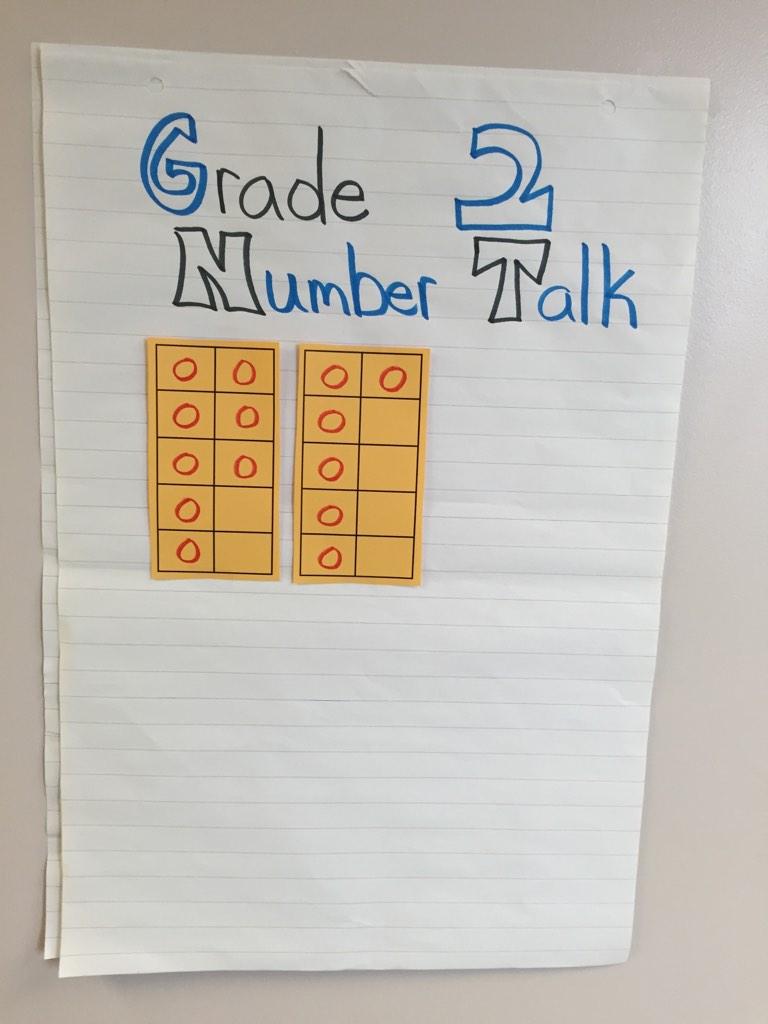
Here is the 10 Frame Template that I am going to use to introduce the discussion:

Embedded image permalink

Has anyone else had any experience with Number Talks?


Sunday, 1 September 2013

"Unplugged" for the Summer


At our last staff meeting at the end of June everyone chose a trinket out of a box I had collected. Tape, toy cars, paper lips, whiteout, candles, matches and other everyday items were in the box. We went around and shared why we had chosen each item. It was a great exercise and offered a glimpse into the lives of our colleagues. I chose an Internet cable and said I was unplugging from the computer for the summer as much as possible.

Well I did it. If you check my twitter timeline you will see from July to the end of August it is practically nonexistent. The same goes for this blog.

There are a few ways to look at this:

  1. It is a good way to relax and charge your batteries and get ready for the next school year.
  2. You could miss something important and/or a great idea while you are 'unplugged'.


I have determined that after this past summer I am more ready to come back to school energised and better off with this break.

I'd be interested to know if anyone has any thoughts or ideas on this.

Do you see the benefits of taking a step away when you are off for the summer?

Or.....

Do you find your vacation an excellent time to catch up on all the great things that are going on out there?

Wednesday, 29 May 2013

Prep Course for Kindergarten Parents

Well kind of .........

We just had our Welcome to Kindergarten Night here at our school. This night was for parents to come and find out a little more information about the school and the full day learning program.

Thankfully for me this was not an opportunity to lecture the parents for an hour on why our school is so great (and it is) and what we have to offer. Our night took on a different format.

The best teacher(s) a child is EVER going to have is their parent(s). This is the angle that we approached learning from last night.

Our school board, Ottawa Catholic School Board is in a partnership with the Learning Partnership. The whole idea is that we want to make sure that students have the school readiness skills by the time they get to school. If students come to school for kindergarten with some key skills this is a very good predictor of their educational success down the road.

We also had community partners at the session to answer any questions that parents may have had. A nurse from Ottawa Public Health was here, a representative from First Words and someone from the Pincrest Queensway Resource Centre.

The Learning Partnership provided each parent with a take away bag that included:

  • picture books
  • foam letters
  • construction paper
  • scissors
  • pencils & crayons
  • glue stick
  • blow up balls
  • play dough
After the Principal's introductory address the prospective kindergarten students and their parents could move around to centres. These centre's were set up by our kindergarten team and that demonstrated some activities that parents could do with their children to help get them ready for school in September. Students played with play dough, used magnetic letters on cookie sheets and cut up flyer's and glued the favourite objects onto paper.

The entire night was a real success. Students and parents were actively engaged in all of the activities and were most appreciative of the hands on learning. We had 37 out of 43 registered students attend the session and we were amazed by the turnout! If the turnout from mothers and fathers is any indication of the level of parental cooperation and involvement that we are going to have over the next few years, we are very fortunate.

Let's hope all parents engage their children playing learning games and giving them lots of learning opportunities before they enter school. If they do this research shows that we will all be well on our way to meet the needs of our students.

Thursday, 16 May 2013

The "Big Shift" in Education

I was having lunch the other day when I stumbled upon an #edchat about what the thoughts were on the "Big Shift" in education today. There were some great ideas thrown around surrounding best practices in teaching, technology, teaching to the test and so on. One "Shift" that kept being tweeted kept peaking my interest. It had to do with the HOW we are teaching our students.

HOW are we teaching our students?

Are many of us out there still treating schools as production facilities where all students are expected to exit the 'building' as a finished piece of work all resembling each other. Or are we making sure that the learning needs of each student is being met in our class or school?

Just what types of skills are being taught to our students today? This Sugata Mitra TED video at the bottom of the post raises some excellent points and questions.

Here is a question worth considering: The skills that we may be teaching our students may not be the ones that they are going to need in the workforce. Are the skills we are teaching lending themselves towards the workforce of today or yesterday? What kind of learning are we wanting to develop?

It seems I am asking more questions than I am answering. However, I believe that they need to be asked, discussed and dealt with.

When students leave school they have to be able to:

  • problem solve
  • collaborate
  • innovate
  • communicate
  • work as a team
  • be creative
This led to a discussion on how to go about teaching our students these skills. Teaching these skills will be a major change for teachers in how they run their classrooms and teach their students. A lesson, let alone a classroom, will have to undergo some pretty important transformations.

I know we are up to the challenge and we are looking forward to the opportunities that will arise for us on our journey.


Monday, 6 May 2013

Twitter Growing Pains?


Just finished a Twitter presentation for elementary and high school principals. The range if experience and comfort levels with Twitter really varied. Some had zero experience while others had a moderate comfort level. Some people had multiple accounts for school and home and others had an account but had never really done anything with it.

I've been at all these different levels. Five years ago I started my Twitter account. At first I had no idea where to start. When I did get going I became totally overwhelmed by the number of tweets that were flying around. Quickly I lost interest and put Twitter aside.

This is exactly where many of the principals seemed to be during this presentation. So the focus of my presentation became:

1. How to filter your tweets using hashtags.
2. How to make a list or follow a list.
3. Finding a niche and following like minded educators.

The moment that educators see the value of joining a Professional Learning Network (PLN) Twitter begins to make sense. The exchange of ideas, the answering of questions and the sense of community are all some of the things that make me keep using Twitter as my key online professional development.

I'd like to thank all those amazing educators out there that have have taken the time to answer questions when I pose them. As a result I always answer questions that other pose on Twitter if I feel that I can help out. Sometimes I can't, but know of someone that can and I point them in that direction.

Take a chance and ask a question. Better yet answer a question if you come across one that you can help with. It won't be long before you have created your very own PLN with people you check up on on a regular basis and probably share resources with.

Friday, 3 May 2013

Cool Ways to Use Google as a School Administrator


Over the past few months I have been reading some really interesting posts and comments on Twitter about using Google Forms in schools.

The past school year I have been trying so reach out to the school community and find out their thoughts and opinions about different things. Teachers, parents and even students have not been able to escape the questions that I pose. I think that this is a fantastic way to communicate with parents and find out right away thoughts and opinions of our school community.

I have been asked by quite a few people how we have incorporated this into school life and our communication circle. Unfortunately, I sometimes forget one or two of the great things that we are doing and I thought I had better compile a list.

Here are some examples of how we have been using Google Forms and Docs here at St. Rita this past school year:

  1. Creating class lists for the upcoming school year
  2. School Technology Application Form
  3. Help Mr. Slack Name his Fish - I also follow this up with a blog post called: Fish Naming Ceremony Turns into a Learning Experience
  4. LTP Parent Survey
  5. Winter Teacher Wish List
  6. Mr. Slack's Student Survey
  7. PLN Information Request
One of the things I am most interested in is communication and using this way to collect information gives me an awesome insight to what is going on and what people are thinking. I get immediate feedback and people get to have their thoughts, ideas and opinions heard. One thing that I have learned is that you have to make sure that you followup with these surveys or forms or they are worthless.

I am always interested to hear about different ways people are using google forms and docs.. If you have any ideas please make sure to let me know!

Tuesday, 30 April 2013

CLL Twitter for Beginners


I was asked by Rob Long to do a brief workshop on Twitter basics and how I use Twitter in my professional life.

Twitter is something that has so many uses to connect with other like minded people, share information and access information. The problem is that Twitter is not always the easiest thing to master.

Here is a chart that will help explain some of the basics..... (click here for a larger version)


Twitter for Educators

Twitter, the popular social media platform, is continually picking up momentum in its number of users; however, I find many educators who are not tapping into the power of Twitter. The mystery that surrounds Twitter, I believe, keeps many people from benefiting from the potential it holds. Consider this recent post on Facebook from a friend who revealed, “My mom thought that hashtags were code messages.” While the post made me chuckle, to those who don’t use Twitter, terms like tweets, retweets, and hashtags, can seem pretty foreign and intimidating.
For those just getting started, I’ll explain a few basic terms to help you easily and quickly navigate your way around Twitter. For those who already use Twitter, you may want to jump down to the next section, Benefits for Educators, or simply download the Twitter Cheat Sheet.
Twitter: The Basics
  • Twitter: According to Wikipedia, Twitter is an online social networking and microblogging service that enables its users to send and read text-based messages, called “tweets.”  A helpful way to think of Twitter is to picture a constantly flowing stream of water. Tweets are the stream. As a user, you dip your toes in and out of the ongoing stream of tweets. You can’t expect to take it all in, simply read a few tweets and then step out.
  • Tweet: “Tweets” are text-based messages of up to 140 characters (letters, symbols, words, spaces, & punctuation).
  • Choosing a Name: To begin, simply sign up for a free account. Try to select a username that is your name or close to it so that people can easily find you by searching. For example, Tim Slack (my name) was taken, @slackt was available so that became my username. People can still find me easily by searching for my name.
  • Following: You’ll want to connect to other educators by following them which can be done in two ways. First, click the Follow button when you see it next to a user’s profile photo or you can click the Follow button next to any of your followers. Start by searching for people you know or educators that you have read or heard at conferences – just type in their name to see if they’re on Twitter. 
  • Hashtags (#): A hashtag (#) is a word or phrase preceded by a “#.” By using hashtags, you can aggregate tweets around that topic. Hashtags help you focus on tweets around a specific topic. You can also add a hashtag to any tweet. Just follow the tweet with an appropriate hashtag and it will appear in the group. For example, here’s a recent tweet with 2 hashtags—Vocab instruction stale? Perk it up! Attend Top 10 Vocab Strategies – free Webinar Dec 12 4-5pm bit.ly/Vd9nGG #principals #elemteachers  By the way, best practice is to limit the number of hashtags following a tweet. Only use the hashtag if that group would be interested in or benefit from your post. How about using #ocsbcll for tweeting interesting blogs and tweets you think we would find interesting.
  • Chat groups: Chat groups are frequently formed around a specific topic of interest and they meet regularly through Twitter. The group is defined by a specific hashtag. To join the group, you simply type in the hashtag and you can follow the posts and contribute to the conversation by posting a tweet followed by the hashtag. Two examples, #TitleTalk and #Satchat, are summarized below.
    • #TitleTalk, a group who shares about how to best promote reading and specific books to students, meets once a month on Sunday nights. Colby Sharp (@colbysharp) and Donalyn Miller (@donalynbooks) moderate the online meetings around a topic such as favorite read alouds, graphic novels, teaching with short texts, or book lists, to name just a few. So when you log in at that time and type in the hashtag, you’ll experience an online conversation around the topic.
    • #Satchat, another active group, is a weekly Twitter chat for current and emerging school leaders who meet around all things education. Brad Currie (@bcurrie5) and Scott Rocco (@scottrocco), two administrators, are the co-founders and moderators of the lively discussions held each Saturday morning at 7:30am EST. Grab your coffee and join them!
    • Want to get started? You’ll find more groups specific to educational technology, literacy, content areas, school reform, and more. I’ve compiled a list of many chat groups on the Twitter Cheat Sheet which is downloadable from this post.
    • Benefits for Educators
        • Connections: Twitter, at its heart, is a place to build connections with other educators – those next door and those across the country and world. Twitter can help you stay connected and up-to-date with news and resources shared by other school leaders.
        • Collaborations: Start your own hashtag to collaborate with colleagues. Additionally, have students create their own hashtag for a group research project. Then group members can save their links to resources and share information through the common stream designated by their hashtag. They’ll be able to easily see others results and research by simply searching by their hashtag.
        • Resources: Another benefit of Twitter is sharing and receiving resourcesTake time to share your favorite resources by providing links to them and be prepared to receive a steady stream of resources from others. Do you need advice about a resource or technology tool that you’re getting ready to purchase? Just ask on Twitter and you’ll probably receive lots of feedback which can ultimately help you research and make decisions.
          What to Do on Twitter: 50 Ideas
        • Professional development: Professional development opportunities are yet another great reason to be active on Twitter. In a time when many schools have limited funds to support professional development, Twitter can serve as a great resource to learn about free webinars, cost-effective professional learning opportunities, and more. Finally, share in the conversation by tweeting about your educational activities, favorite conference, read aloud, tech tool, and more.

Some of the educators on Twitter that I suggest that you follow:

Interesting blog posts:


100 Top Twitter Tools

25 Bio Tips for Teachers

140 Twitter Tips for A Better Social Media Experience


Tuesday, 23 April 2013

Creating Your Own PLN


Professional Learning Network (PLN for short)

It was not too long ago that I started connecting with other educators through twitter. After about two years I am not quite sure what my professional PD would look like without it. Thanks to my PLN I have been able to incorporate many new and innovative ideas that I believe help make our students experiences here more educational, relevant and powerful.

So how do you go about creating your own personal PLN? Follow these easy steps and you will be on your way in no time!
  1. If you do not already, get a Twitter account 
  2. Follow a few people that you know in your 'field'. For our purposes I am talking education
  3. Lurk around and get comfortable
  4. Follow some of the lists that people you follow have made
  5. Ask questions! You may be surprised who will answer you
  6. Get involved in a chat
  7. Post or ReTweet (RT) articles or posts of interest to you
  8. Start a blog
  9. Share what you are doing in your classroom or school
I can honestly say that since I have started my own PLN I have become more focused, inspired and even a bit more of a risk taker in my professional life. I am learning about new and creative ideas to implement at our school. Some things I never would have though of and other things I had thought of but never tried out. It is here that I can gain from other experiences and try and make them work for us here.

If anything else, using Twitter, writing on a blog, are both great sources of PD for anyone. Plus, it is a great reflective practice for all of us!

Is there any must follow education blogs that you follow? How about educators on Twitter? Let me know I'd love to check them out.


Friday, 1 March 2013

The Vortex Known as the Lost and Found

The Lost and Found (LAF) has always been a little of a mystery to me I admit. Having some experience with this as a principal in an elementary school, I do know growing bludgeoning Lost and Founds. Never could I figure out how students could lose their hats, mits and other articles of clothing.

How could parents not keep track of their kids and their clothing?? Well.......

Since my second child has entered school I suddenly understand. Next year we are buying hats and mitts in bulk and keeping a spare pair in the trunk of the car. All the fancy stick on labels in the world cannot help us here. The Lost and Found is a vortex where many items are never found and are sucked into what I like to call the LAF Dimension.

Yesterday, the LAF Dimension actually came in handy. I could not believe it. The other morning there was a big snowstorm and we took a different vehicle to school. What I did not know was that my oldest left his mitts in the other vehicle and we did not figure this out until we got to his school.

In a split second it was decided to enter the LAF Dimension and rescue a pair of mitts for the day. Within seconds we had a matching pair from the overflowing mountain of articles.  At the end of the day the mitts were returned and words of thanks were whispered to the LAF Vortex.

Lesson learned: Sometimes the Lost and Found can indeed help you out.

To all the parents out there:

As a principal, this parent understands.

Thursday, 21 February 2013

The New Communication


The other day I was asked to take a look at Michael Fullan new paper called: 

Great to Excellent: Launching the Next Stage of Ontario's Education Agenda

After reading this paper I was asked to reflect and provide a description of how the school I am at is adapting to the changes in education. Specifically in regards to technology, social media and communication.

Fullan identifies the 6Cs that are necessary in education today:
  1. Communication
  2. Citizenship
  3. Character
  4. Collaboration and Teamwork
  5. Creativity and Imagination
  6. Critical Thinking and Problem Solving
Over the past number of years the way school leaders interact, lead and communicate with their school community has changed greatly. The way information is shared and distributed has evolved to keep up with what is happening in technology, learning and communication outside the walls of our schools.  Not only that, we have to address how students learn in the 21st Century and how teachers open up the curriculum for the students to best meet their learning needs.


One of the challenges we all face is: How do we get these new technologies and and methods of communication to meet the 21st Century needs of our students? Here at St. Rita we are working hard to meet these challenges. The way I have decided to go about implementing these changes at St. Rita is to first know, understand and use these technologies myself.

.
By focusing on areas such as the 6Cs myself, I am trying to lead from the middle and modelling and encouraging the use of new technologies and ways to communicate with a wider audience. The idea is that teachers will transfer these skills, concepts and ideas into their classrooms and teaching.

Some of the thing that we have done at St. Rita are:

Communication
  • St. Rita Twitter account: Used for announcements, to showcase student work and to provide resources for parents. This account is also linked to a St. Rita Facebook page so all the tweeted links go to Facebook.
  • St. Rita Staff Room: A place to share information and an effort to use meeting time more effectively by not dealing with small administrative items. This allows for more discussion for school improvement at meetings.
  • Using screenr.com: St. Rita Flipped Parent Announcement - This was used at the beginning of the year to be an alternative to the traditional paper announcement.
  • St. Rita website: constantly updated and the first thing that parents often see. Therefore, this communication tool is the face of the school.

Citizenship
  • Eco-Squad Blog: Our Eco-Squad has worked to create their own blog and they have been working with a school K-5 in New Jersey.
  • My own blog is a good way to contribute to the educational community what I am doing. We are now in an age where we are all getting ideas from blogs, Twitter and Facebook. There is also a responsibility to share what you are doing with your Professional Learning Network (PLN): The Education of an Elementary Principal

Character
  • We are also looking at the importance of teaching students the value of creating a positive digital footprint.

Collaboration and Teamwork
  • As a staff we use Google Drive for a variety of purposes. Including making class lists for the following year: Class List Template
  • Surveying staff using: St. Rita Winter Wishlist  -  Wishlist Results
  • We know have Junior students collaborating together on Google Drive with each other and with teachers to complete their work.

Creativity and Imagination

Critical Thinking and Problem Solving

Hopefully, some of these things that we are doing here at St. Rita are going to take root in our teachers classrooms and move into their teaching practice. I believe that leading from the inside out is the best way to implement the 6Cs in our schools and that leadership in our schools is a critical part of making this work.


Wednesday, 6 February 2013

Art and Math Fusion: Our Geometric Museum


This Friday the hallways of our school are going to be transformed into a Geometry Museum. Parents have been invited to take a walk around our gallery to see all of the interesting and creative work that students have done.

As a staff we decided to have math as a focus this school year to help us increase student learning. The first thing that we did was have a 'Math Assembly' which was extremely successful and resulted in some amazing conversations between student and teachers alike. There is no question that everyone in our school learned from this activity.

Here is a link to the post I did on the 'Math Assembly': Math Assembly: A Success!!

The next area we decided to focus on was Geometry and to have teachers look at the big ideas in the curriculum for their grade. We took part in a PLC Day where we discussed where we were in regards to our math goals for the year and to move forward to the next part of our plan.

It was amazing to listen to the discussion and to hear the enthusiasm of our teachers as they brainstormed what direction we should be headed in with our geometry goals and student work. From the discussion came the idea to pull from the Arts Curriculum and the Mathematics Curriculum for our next focus.

THE IDEA

Turn our school into a geometry museum for a gallery walk.

THE RESULTS

Every teacher and student would dive into the curriculum and produce a piece of work that was cross-curricular. Parents would be involved by coming into the school and seeing what their children have created.

Some of the resources we used are listed below:
Once the Geometry Museum and the gallery walk is complete I'll share the results!


Wednesday, 23 January 2013

WELCOME! Branding Our School


What do you think about when you see some of the logos above? 

More importantly: What do people think about when they see your school logo?

When I was asked I immediately thought about asking parent and students how they see our 'brand'. After some reflection I began to realize that it starts with the school. This led to the following questions:
  • What do you want parents and students to think about our school?
  • What do we do to make our brand one that is attractive to parents in our school community?
  • Have you had the discussion with your staff about how we want our school to be see in the community?
Since this week is the official Kindergarten Registration week, I have been thinking a lot about how new parents see our school. Last week we had a work shop at the school board to talk about our school brand and creating a welcoming environment for everyone. Not just students.

There are so many ways to create positive and powerful brand for your school each and everyday:
  1. The website and social media tell a lot about the school. Keep them updated!
  2. When someone comes in to the front office, are they greeted? Is it welcoming? How parents feel when they come into the front office plays a huge role in whether or not they want to send their kids to your school.
  3. Answering the phone - Can they hear a smile on the end of the line or does it sound like they have interrupted something? 
  4. How fast are you at returning phone calls and emails to parents?
  5. What do your newsletters look like? Do they come out on time and at the start of each month?
  6. What kind of progressive discipline policy does the school have?
  7. As an administrator, are you visible to your school community?

What matters most is "Who are you?"

If you have a positive brand for your school in your community the benefits are enormous. There is a connection with parents and they will be inspired knowing that you are making your school the most welcoming place you can. Those connections you made, they will go out and spread the word.

My goal this "Kindergarten Season" is to make a personal connection with every parent that comes into our school to register their child or to inquire about our school. I personally meet and talk with each one and invite them to contact me if they have any questions whatsoever. 

Is anyone else working extra hard to make connections with their community and to build relationships? I'd be interested in collaborating and brainstorming ideas.


Tuesday, 8 January 2013

Fish Naming Ceremony Turns into a Learning Experience


You never know what is going to happen when you try something new. 

Not too long ago I decided to buy another fish for my office. I don't know what happened. Usually I have a fish to start off the year, but this year my office space was totally fish-less. 

With fish ownership comes the great responsibility of naming the fish. Normally someone would choose a name for me. This time I decided on another approach.

I created a Google Forms survey:


What happened over the course of the week was totally unexpected. Students were talking about this survey  everywhere in the school. It be came a learning experience where I least expected it. Often, these are the best kinds of learning experiences.

I announced the survey on the Monday and told the students that they would have until Friday morning to submit their response for the fish.

Over the course of the week it was very interesting to see how the results were shaping up. Early on it was the primary students that were voting for their favourite choice: Mr. Bubbles. Once the Junior students got involved the results and the survey really began to take off. OK ........ the results were getting tampered with by our Junior students. This lead to some interesting conversations in the staffroom.

In the end:

  • 1652 votes were cast in a school with a population of 305
  • Sushi was the name that ended up finishing with the most votes
Learning Implications:
  • there were many opportunities for purposeful talk in class, at home and in the hallways and school yard
  • students were learning about Data Management and were interpreting information in a way that did not even seem like school work
  • students who were never exposed to google forms had the opportunity to use them from JK - Gr. 6
  • parents had the opportunity to get involved in this survey with their children
  • teachers in the classroom had the opportunity to use google forms. If they had never used them before it was a great opportunity for them to try something new.
A next step for myself is to use google form in a survey that will go out to parents on our website. I think this will be a great way to communicate with parents and to get a feel on what they are thinking on different topics that are important to our school.


Friday, 14 December 2012

Math Assembly an Educational Success!!

This week we had our very first Math Assembly here at St. Rita Catholic School in Ottawa, Ontario. Every single class in the school put together something that demonstrated their knowledge and understanding of the Patterning and Algebra curriculum.

Some of the presentations included:

  • growing and extending patterns with kindergarten students modelling
  • using tableau's to demonstrate patterns
  • using music to show the pattern and showing their understanding with drums
  • short skits with props
There was an unbelievable amount of time, effort and creativity that went into these presentations. Once the assembly was finished there was absolutely no question that the students here benefited from this experience. The purposeful talk that we could all hear in the gymnasium was very empowering and without question it has carried on in the classrooms here in our school.

Staff members here also had so many positive comments about this new learning experience. One thing that was quite interesting was that every teacher in the school could see what the students were expected to learn in Patterning and Algebra from Kindergarten to Grade 6 and how they did it. This has lead to quite a bit of informal professional development right at our school and we are excited to look towards a new idea and a new goal.

Following the assembly we had a school wide assessment and we gathered in divisions the next week to moderate the student work. Teachers had great discussions and ideas to help increase student achievement in this area.

Here is our school wide assessment that covered K - 6 and met the big ideas of the Patterning and Algebra Curriculum from the Ontario Mathematics Curriculum.


In the new year we are going to have a school wide focus on Geometry and Spacial Sense and are brainstorming ideas of how we can demonstrate our learning to the entire school.

Tuesday, 23 October 2012

School Wide Halloween Learning Activity


Every now and them I try something like this out. Sometimes I think it is not often enough and other times I worry that teachers have so much to do in their classrooms that they do not want my 10 minutes activities. However, from feedback that I get they like to have these activities to do with their students at different times of the year.

Here is the activity that I have just posted for the school to work on: School Wide Pumpkin Activity

Some of the reasons that I think that they are important to do are:

  1. There are always curriculum connections that apply to each grade level.
  2. They build community within the school.
  3. It gets teachers talking about what they are going in their classrooms.
  4. The kids get excited and love to tell me about their learning experience around the task.
  5. It gets continues to get me involved in what learning is happening in the classrooms in the school.
If any other administrators do similar things I would love to hear about it and find out what your experiences are with these type of tasks. 


Monday, 22 October 2012

Reflecting on School Use of Technology


Getting more and more technology into the classrooms to help compliment student learning has been a goal of mine for quite some time. We are steadily acquiring the technology here at St. Rita Catholic School so we can offer a student experience that takes advantage to the reality that students learn in.

In our Learning Commons and classrooms students have access to:

  • 30 iPads
  • a cart of 25 netbooks
  • 20 iPods
  • 11/13 classrooms are outfitted with a SmartBoard as is our library
  • each teacher had a laptop 
We are looking at BYOD (Bring Your Own Device) activities here in our Junior grades and there has even been some collaboration of Junior and Primary students using the iPods.

Here is the St. Rita BYOD Policy for the 2012-2013 school year.

It never fails to amaze me just how much our students know about these devices. Not tapping into this knowledge to help our students meet their learning goals would seem like a waste.

I think it is important that we pause and reflect where we are at this moment. We are very fortunate to have so many great things here at our school. Taking a look at where we are and where we can move next is going to be a very important stage for us. Before use any more school funds to purchase more technology we are going to take a close look at how we use technology here at St. Rita and how we can use it to meet our students needs and to increase student achievement.

Tuesday, 9 October 2012

Flipping the Monthly Staff Meeting


I have been hearing a lot about flipping classrooms over the past year or so and more recently I have come across schools that are flipping their staff/faculty meetings.

The more I thought about it the more it seemed to make more and more sense to me. Here is why:
  • We are always looking for more time to get together to talk about the real issues in our school. These issues include assessment and evaluation, rich learning tasks and looking at student work as a team. It has been quite difficult to get teachers released to have the time to talk about these things. Flipping a staff meeting allows for teachers to read through all of the information items at their leisure so we can spend the time talking about the issues we want to. 
  • Staff members do not want to sit and listen to be for an hour talking about things that could have just as easily been sent in a email.
  • The flipped meeting will archive everything that is important that our staff members need to know about. If they forget something, need something or just want to reference something that was discussed, it is all in one place
So what I have decided to do it use a blog to 'flip' my meeting. In a perfect world I would have started this at the August Staff Meeting but for now the October one will have to do.

The first meeting is this afternoon and I am going to try it out. In the future I will be sending it out at least a few days in advance so everyone can take a look before the meeting takes place.

Any feedback would be most welcome. Especially from anyone who has already tried this in their schools!

Tuesday, 2 October 2012

The Role of Homework in an Elementary School


I have never been a big fan of homework even though I admit I have assigned homework in the past that I would never dream of sending home now. Why? I am not sure if it is because I am now more informed about how students learn and how they or motivated to learn. Or, is it because I have my own children and I can see the other side of the fence.

The big question surrounding homework for me is: What is the purpose of the work?

Should work come home with students on a regular basis? Absolutely. What we have to look at is what type of work goes home with our students. Is it busy work that is given just for the sake of giving students homework. Or is it an extension of the learning process in the class meant to allow students to follow their own curiosity and make their own investigations and conclusions?

In Ontario we have a document entitled: "GROWING SUCCESS: Assessment, Evaluation, and Reporting in Ontario Schools".

The document takes an extensive look at assessment and evaluation and how they are used to improve student learning.

One of the sections of the document that really stood out for me was:

"To ensure equity of all students, assignments for evaluation and tests or exams are to be completed, whenever possible, under the supervision of a teacher. Assignments must not include ongoing homework that students do to consolidate their knowledge and skills or to prepare for the next class."

This section stood out to me for the following reasons:

  • It puts all students on an even playing field so to speak.
  • Every child's reality is different at home and they are not being penalized because of who helps them or who does not.
So what are the reasons that I am rethinking homework in an elementary school?

  1. Homework is often has the wrong focus: If homework is being sent home in order to get all aspects of the curriculum covered, there is a problem. Homework should go home that promotes learning and that spark students interest.
  2. School is a job: Our students spend 6 hours plus a day at school. Some of our students do not even get picked up from childcare until almost 6 o'clock. Let's think about ourselves. When you get home do you want to do and hour plus of homework? Our students should be able to focus on their studies at school in a positive environment that makes going to 'work' fun. No one wants to bring work home.
  3. Let a kid be a kid:  Kids need to run around and be active. When they get home they should have the opportunity to go outside and play and participate in extra-curricular activities without worrying about doing their hour of homework each night.
  4. Reality: Some of our kids go home to an empty house. Mom and Dad may work late. Maybe it is a single family home where the parent takes a night shift and your student is responsible to take care of her/his siblings. Often we have no idea what is happening in the homes of our students.
  5. The majority of homework is ....... well boring: More often than not homework mirrors what has gone on in the classroom during the school day. If we are going to assign after hours work, why not make it interesting and offer different learning opportunities.
When we do assign homework I would like to see the homework do the following:
  • motivate students to investigate
  • give the students choice of what they can do for homework
  • have the students document what they have done at home
  • have open ended homework assignments that act as a springboard to discover something new and exciting
I would really be interested in seeing what kind of effect this would have on a learning environment at school. Not for one second do I think that it would be perfect. Of course there would be obstacles and things that need tweaked. However, I am sure that there would be students at school that are less stressed out, chronicled details of out of school discoveries and students who have more control over their learning while meeting classroom expectations.

I think I will start the ball rolling here. I'll let you know how the journey progresses.

Tuesday, 18 September 2012

Flipping Parent Communication

Last week I saw a blog written by Peter DeWitt on a new and creative way to communicate with parents instead of the age old newsletter. I was very interested in the idea and modelled my first one from the one that he posted on his blog.

At our school we are trying to embrace more and more technology in our classrooms. I am a firm believer that if this is going to happen and be successful in a school the leadership in that school has to model and use the technology.

There would seem to be some great perks to this as they are more interactive, they can be paused rewound and repeated. I am hoping to get some feedback from parents and see what I can do to make them better and more interesting.

The program I used was SCREENR found at: http://www.screenr.com/

Screenr

It was incredibly easy to use and they only thing I really want to work on is the sound quality and of course writing better scripts! You also have a time limit of 5 minutes so the announcement would not go on and on and on.

Take a look if you are interested:


Thanks for reading!